How PLC Automation Reduces Labor Costs for Small Manufacturers
Are you struggling to keep up with rising labor costs and staff shortages in your factory? You might be wondering whether a small manufacturer's PLC automation system is actually affordable or only for giant corporations.
The short answer is yes: small manufacturers can absolutely afford programmable logic controller (PLC) systems, and they usually pay for themselves in less than a year by dramatically reducing manual errors and wasted hours.
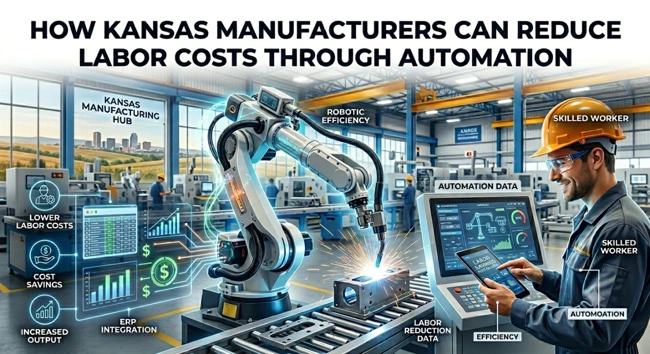
Imagine walking into your factory floor in Topeka, KS. Instead of your workers spending hours writing down numbers on paper logs, copying data into spreadsheets, or manually turning valves, a smart machine does it all. When you introduce industrial automation to small businesses, you shift your valuable team members away from boring, repetitive tasks and place them in roles where they can do more meaningful work. This shift is the secret to scaling up without constantly hiring more people.
Read on to discover how a simple control system can transform your daily operations, lower your overhead, and make your business much more profitable.
What is a PLC and Why Should You Care?
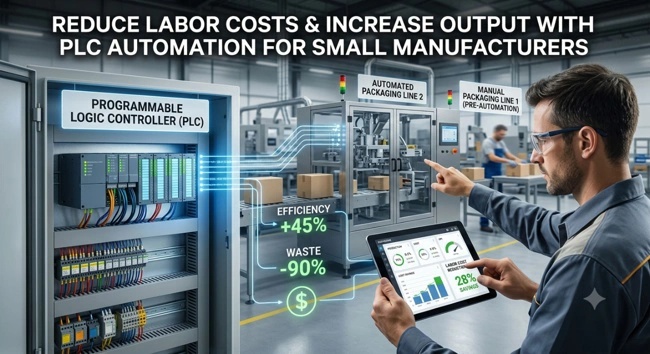
If you are new to this technology, a PLC is essentially a rugged, industrial computer. It stands for Programmable Logic Controller. It acts as the "brain" of your machinery, telling motors when to run, sensors when to check for errors, and conveyor belts when to stop or start. When evaluating PLC vs manual labor, the difference in consistency is massive.
A human worker gets tired, distracted, or makes small math mistakes over an eight-hour shift. A PLC runs exactly the same way, every single second, day or night.
For a small factory, upgrading to these systems is the fastest way to reduce manufacturing labor costs. You do not need to replace your entire team. Instead, you use small factory automation to make your existing team twice as productive. This means you can handle larger orders and grow your business without experiencing the growing pains of a labor shortage.
The Real Cost: Affordable PLC Systems USA
A major concern for most business owners is the price tag. Many assume that industrial machinery will cost hundreds of thousands of dollars.
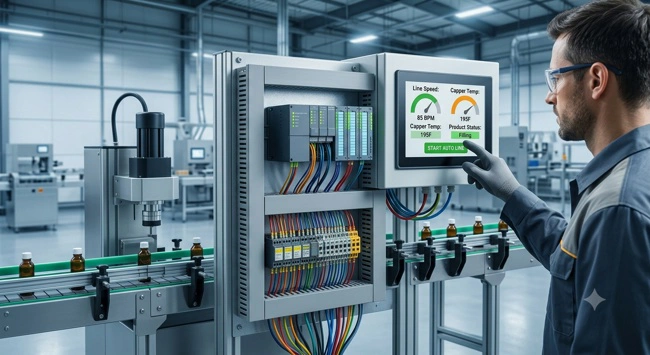
However, finding affordable PLC system providers in the USA is easier than you think. You do not need to automate your entire factory all at once.
You can start with a single assembly line or a single packaging station.
To help you plan, here is a breakdown of what a typical PLC system installation and upgrade looks like for a small factory:
|
Project Scale |
Estimated Cost Range |
What is Included |
Expected Labor Savings
|
|---|---|---|---|
|
Basic Entry-Level |
$5,000 - $15,000 |
Single machine control, basic sensors, simple PLC unit |
10% - 20% fewer manual hours on that specific task |
|
Mid-Range System |
$15,000 - $45,000 |
Multi-machine coordination, custom programming, safety sensors |
25% - 40% reduction in assembly line labor costs |
|
Full Station Upgrade |
$45,000 - $80,000+ |
Complete line automation, advanced touchscreen controls, data logging |
Over 50% reduction in manual supervision and testing hours |
When you look at these numbers, the actual programmable logic controller cost is highly manageable when compared to the ongoing yearly salary and benefits of a full-time employee. Once the system is running, the maintenance costs are very low, meaning your savings accumulate month after month.
How to Calculate Your Factory Automation ROI
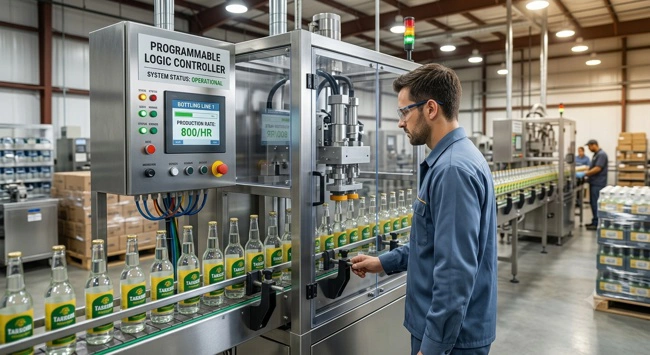
To justify the upfront cost, you need to look at your factory automation ROI (Return on Investment). Let us look at a simple real-world scenario. Let us say you run a small bottling plant in Kansas. Right now, you pay two employees a combined $75,000 a year to manually fill, cap, and label bottles. They work hard, but they can only package 200 bottles an hour, and they occasionally spill product or apply labels crookedly.
If you spend $25,000 on a mid-range PLC system installation, those same two workers can now supervise a machine that automatically fills, caps, and labels 1,000 bottles an hour with zero spills.
Your production speed increases by five times, your waste drops to zero, and your staff can spend their time on quality checks and shipping. In this scenario, your factory automation ROI is achieved in just a few months because of the massive boost in daily output and the reduction in wasted materials.
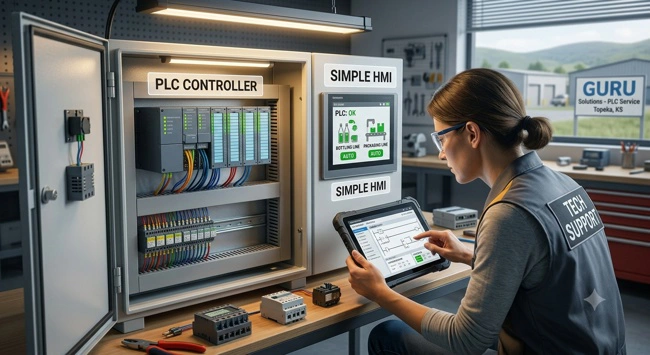
If you want to explore the specific technical options for your machinery, you can check out the professional Programmable Logic Controller Service offered by GURU Solutions to see how they customize these systems for businesses like yours.
Frequently Asked Questions
Can small manufacturers really afford PLC automation?
Yes. Modern technology has made affordable PLC systems in the USA highly accessible. You do not need a massive budget to start. You can automate a single task first, see the immediate savings, and use those savings to fund future upgrades.
Is it hard to train employees to use a PLC system?
Not at all. While the programming behind the system is complex, the user interface (the touchscreen your workers interact with) is designed to be incredibly simple. Most operators learn how to run the automated machinery in just a couple of hours.
What is the lifespan of a typical PLC system?
PLCs are designed for harsh industrial environments. A high-quality, professionally installed PLC can easily last 10 to 20 years with minimal maintenance, giving you a very long-term return on your initial investment.
Do I have to buy all new machinery to automate my factory?
No. In most cases, engineers can retro-fit your existing manual machines with sensors, actuators, and a new PLC brain. This is a highly cost-effective way to get the benefits of modern automation without the high price tag of brand-new machines.
How does automation help with safety on the factory floor?
Automation takes humans away from the most dangerous parts of the assembly line. By letting machines handle heavy lifting, cutting, or high-temperature tasks, you greatly reduce the risk of workplace injuries and lower your insurance costs.
Get Your Custom Automation Quote Today
Don't let high labor costs hold your business back. Whether you operate in Topeka, KS, or anywhere else in the country, GURU Solutions is here to help you design, program, and install the perfect PLC system for your needs. Contact GURU Solutions today to get a free quote and discover how affordable your automation journey can be.